Assertive Communication Formula

The assertive communication formula is one of the first and most pivotal lessons I learned in the life skills group.  I’ve talked about assertive communication before, but I’ve learned recently that it can be used in many more useful and healing ways than telling a friend or whatever how you feel and letting go of the outcome.

Let’s back it up for a minute first and cover the assertiveness formula basics.  The purpose of the assertiveness formula is to speak your truth/stand up for yourself, without blame, passive-aggressiveness or victim-hood.  You have to own the statement as your interpretation/perception, because it is your truth and the other person might have perceived/interpreted the situation totally differently.  It is imperative that you let go of the outcome.  You cannot control the other person’s actions or thoughts.  All you can do is tell them how you feel and let them decide how they want to proceed.  Keep in mind that others are not responsible for our feelings, nor are you responsible for theirs (this does NOT mean you should be unkind).  For this reason, you should also avoid saying “make/made me feel.”  This may not sit right with you at first, but the truth is that you, and only you, own and control your feelings.  You have the power to decide what they are, so nobody can MAKE you feel anything. Just to reiterate, try to use “I” statements, instead of “you,” to avoid the blame/defensiveness dynamic.  For example, I feel hurt, instead of you hurt me.  I feel ignored, instead of you don’t care.  I disagree, instead of you are wrong.

All of that said, here is the formula:

Assertive communication formula

These are the things I’ve learned about using this formula (in chronological order of realization):

  1. Assertive communication is the only way to end the self perpetuating cycle of passive-aggressive, codependent behavior (more about that here).  It is the period to: he did this, because she did that, because he did this, because she did that, etc infinity.  Don’t get sucked into blame, defensiveness, and insults.  Just repeat the issue, your feeling about it, and what you need, until the other person either hears you, or gets tired of arguing with someone who won’t argue back.
  2. It is important for your inner child/heart/source/whatever you like to call it to know that you take her feelings seriously and will not dismiss them.  You can’t control the outcome of what happens after you have expressed your feelings, but simply bringing them to light will make you feel better.  Maybe you can let it go after saying it out loud.  Maybe you just get to stop obsessing about “what-if.”  Regardless of the outcome, you can rest easy in the knowledge that you were true to yourself.  You were authentic.  When you put your best self out there, great things will start to happen.
  3. Sometimes (many times), when you tell someone how you perceived a situation, or interpreted their action, you find out that it was a misunderstanding.  Everybody has their own reality.  For example, if you tell a woman with psoriasis on her arms to bring a long sleeved shirt to the lake, she might perceive that you are judging her skin condition or find her repulsive.  Meanwhile, you might have been thinking about the fact that it would be getting cold, or that the sun would be strong/dangerous, or that long sleeves might protect her from mosquitoes.  My own thoughts can (and have) turn(ed) a perfectly harmless question or comment into a vicious insult and in the past I have allowed these “insults” to fester to the point of ruining relationships.
  4. Lastly, or most recently, since I bet there are still more lessons to be learned,  I realized that going through the formula in my mind forces me to name the feeling I am experiencing and the reason, or what caused it, to myself; this is helpful, especially in situations when the perpetrator is not easily identified.  I’ve been spending a lot of time thinking/talking/learning about cognitive distortions, and as it turns out, sometimes my feelings about a situation are based on HUGE distortions.  Take what happened earlier this week for example.  Once I unraveled the distortions (shame, guilt, all or nothing thinking, etc), I was able to see some positives in the situation and resolve my negative/harmful feelings about it.

Don’t get me wrong.  I haven’t made a complete 180 and now think that there are wholesome intentions behind every negative or negative seeming interaction, but just like they can’t all be good when you get to the bottom, they also don’t all have to be bad.  I would say the biggest takeaway for me is that the assertiveness formula allows you to process your feelings by lovingly questioning the feelings and their sources.  After that, if you determine that an assertive conversation is still warranted, you already have the words ready to go.
Posted in Uncategorized | Tagged , , , , , , , , | 3 Comments

Sometimes you need a little push

Sometimes the biggest and worst feeling curve-balls from the universe are actually amazing opportunities to reframe your thoughts and move forward.

Yesterday, during my coincidentally perfectly scheduled treatment team, I found out that, as of that day, my insurance was no longer going to cover the Intensive Outpatient Program (IOP) for eating disorders.  The treatment team was surprised/outraged and offered suggestions, like getting a lawyer and trying to talk to the program administrators to see what kind of out of pocket rate I could get.

The news sent me into a bit of a tailspin, because I immediately tightly wrapped myself in all-or-nothing thinking.  If I can’t “complete” the program, I will never get to have recovery.  Without the support from this program, I will never be brave or strong enough to let go of my disorder, my crutch.  I also very quickly found ways to blame myself for this happening.  I didn’t progress fast enough.  I’m not doing it right.  I don’t deserve to be here, because I’m not sick enough.  I’m not serious enough.  Also, I felt if I wasn’t willing to rack up a huge bill, I must not want it badly enough.  I amazingly see the distortion so clearly right now.  All of these thoughts come from the single root: I am not enough.

But then something amazing happened (and I may have gotten a little push in this direction from my individual therapist), I realized that there is more than one way to skin a cat.  My grandmother used to say that.  As figurative speeches go, that one seems pretty gruesome, in retrospect.  Then again, this process is not always comfortable, so it kinda feels appropriate.

Anyway, I had a couple of really big revelations.  You might call them epiphanies.  First, people recover outside of intensive outpatient programs all the time.  Second, I have been using my required 10 hours of group a week as an excuse to talk the talk (because that’s what you do in group) instead of walking the walk.  Third, and this is the one my therapist helped with a little, nobody leaves the program CURED.

This kind of program is supposed to give you a foundation to build on.  Skills to apply.  Tools to use.  And as I ran through the gamut of emotions about this loss (because that is really what it IS), I was identifying the distortions and reframing the thoughts and figuring out what I needed and then asking for it.  Suddenly, this gut punch felt like an amazing opportunity to move forward.  To walk the walk.  To honor the lessons I learned, the work I did and the relationships I built.

I can no longer say that I’m doing the work just by showing up at group and working through some theories.  I actually have to REACH OUT and ASK FOR SUPPORT when I need it, rather than just rolling around in the safety net that is group therapy.  I have to work on maintaining connections/relationships, because we’re not just going to see each other three times a week.  I have to be authentic and assertive in real life, an uncontrolled environment.

As hard and sad as it is to say goodbye (actually see you later) to people you have become very attached to, we got to have an amazing closure group.  It almost felt like a ceremony.  And I truly got to see how far we all have come together.  I get to take their voices with me, the voices that gently, caringly challenge me and question my distortions.  I get to think about how much they all deserve recovery and self acceptance and support, how much I want it for them and how I can show myself that same kindness.

My only regret is not knowing what lessons I will be missing in the future.  Other than that, I have gone from complete turmoil and desperation to calm confidence and clarity in just over 24 hours.  If that is not an amazing glimpse of recovery, I don’t know what would be.

Posted in Uncategorized | Tagged , , , , , , | Leave a comment

The Curse of Perfection

“I’m a perfectionist” is one of the most cliche responses to the interview question: “tell me about one of your weaknesses.”  The trick to answering that question is turning a “negative” into a positive, and you believe that (in business) the pros of perfectionism outweigh the cons.  You hope the interviewer will take that response to mean you focus on the details, you may take extra time to do something well, but it’s because you care about the quality of your work.  Those all sound like positive features for an employee, so maybe this answer saved your interview.

The truth is,  perfectionism can be extremely debilitating.  For example, the fear of not being able to complete a task perfectly, may keep you from getting started at all.  You might not be able to ask for help when you desperately need it, because (a) you feel like not being able to handle it yourself is a failure, (b) you think others will consider you a failure, (c) you don’t think anybody else will/can do it as well as you.

Wikipedia (I know this is not considered a legitimate source, but humor me) defines perfectionists as follows:

Perfectionists strain compulsively and unceasingly toward unobtainable goals, and measure their self-worth by productivity and accomplishment.  Pressuring oneself to achieve unrealistic goals inevitably sets the person up for disappointment. Perfectionists tend to be harsh critics of themselves when they fail to meet their standards.

The goals are unobtainable.  The expectations are unrealistic.  Failure to meet self imposed standards leads to low self-worth, pressure, disappointment and harsh SELF-criticism.  To reconcile these extreme, absolute, unchangeable requirements with real life, our mind creates cognitive distortions, convincing us of something that really isn’t true (or, if like me, you are still in the denial stage… something people are telling you isn’t true).  Some examples of these distortions might be:

  • Anything less than perfect is a total failure
  • If I am unable to anticipate a single issue or catch an error, I am not good enough
  • Feedback regarding my work means I could/should have done better
  • If I am not successful doing everything, I can not be successful doing anything

There are many more examples, but I’m sure you get the point.  Like everything else I have talked about, this is something I’ve struggled with all my life, but there is a more specific reason why I am struggling with it right now.

I have made several large decisions over the last several months.  Life decisions, home decisions, friends decisions, decision decisions.  And true to perfect form, I have been agonizing over them ever since.  I blame myself for how things turned out.  I just can’t seem to let go of what I consider a mistake and try to move forward and make the best of it.  I keep replaying my decisions/mistakes to figure out why I didn’t know better.  I should have known better.  All things point to knowing better.  How could I still make these unforgivable mistakes? 

My therapist says I’m “Monday morning quarterbacking [my] life.”  Of course I think I should have known better in retrospect, now that I have all the information and I know what the other team is going to do, but during the game that is not a realistic expectation.  She says “you are human and humans make mistakes.”  She says all the stuff about having to forgive myself for those mistakes and not holding myself to an impossible standard, but all I can think about is how I will never be able to climb out of this hole I have dug for myself; how my life can never turn out the way I had hoped/thought I deserved, because I have screwed it up beyond repair; how… well, you get the point.

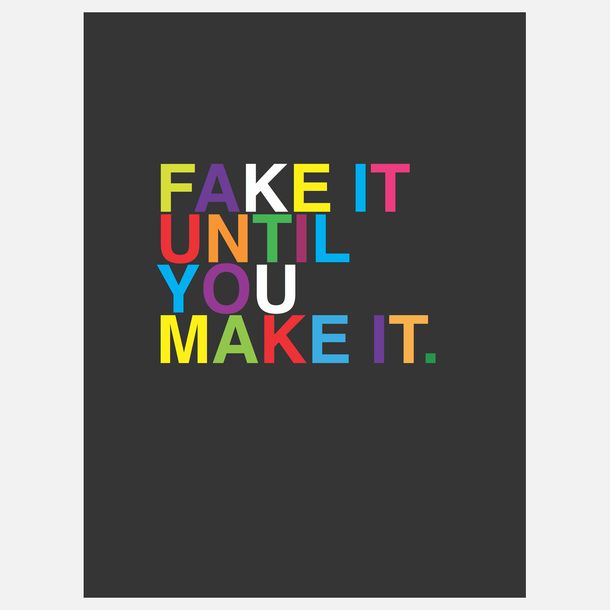
I don’t have a big revelation about how to get through these feelings.  I am told that our feelings and beliefs follow our thoughts and if I reframe these doomy, negative, perfectionist thoughts in a positive way, then I will eventually start to believe and feel my new positive thoughts.  There is supposedly science behind this (that’s a topic for another day) but in the meantime, I just feel like I am lying to myself.  I’ve never been one to consider “fake it til you make it” an acceptable strategy, but apparently that’s the one I need.  So maybe we color it up a little and make it sound more exciting.  And then we do it.  Maybe.

Fake It Until You Make It.

Posted in Uncategorized | Tagged , , , , | Leave a comment

Honoring your needs when you don’t know what they are

One of the recurring themes in my treatment is taking care of your own needs first, rather than sacrificing them for the needs of others.  The purpose of this is not to be selfish, but to be a more complete person that is more able to be generous and kind to others.  This is something I’ve really been struggling with.  Not just because of a lifetime of making my own needs small and putting myself last, but because I don’t actually KNOW (at least not completely) what my needs are.  Or maybe it’s because my needs have always been wrapped up in what other people wanted and needed.  Either way I’m finding that I frequently feel bad, no matter what I decide.

I’m starting to think part of the problem is that my head and heart don’t want/need the same things.  My heart wants to be spontaneous and care-free, but my head needs to be calculating and cautious.  My heart wants to be able to ask for help and be supported, while my head insists that I am strong and independent and don’t need the support.  My heart wants to love deeply, genuinely, COMPLETELY but my head is determined to protect me from being rejected and hurt.  My heart wants to be intuitive, emotional, while my heart needs reason and logic and PROOF.  My heart wants to be the innocent child inside of me that doesn’t remember being hurt and trusts the world with her life, while my head cataloged all the things that ever made me uncomfortable and has valiantly fought to keep those things from ever touching my heart again.

My head is like an over-protective parent who kept her child locked away for fear she might get hurt.  But being locked away has also made the child unable to stand on her own and the slightest gust of wind might blow her away completely.

“A ship in harbor is safe, but that’s not why ships were built.”

The question of course becomes: how do you convince the parent that the child can handle the inevitable pain and heartbreak she will find in the world?  How do you convince the parent that the child can bounce back from the sadness and know that she is still loved, worthy of love and life will go on?  How do you convince the parent/head that the child/heart will have to go into the world, alone, unprotected, to have any chance at life and love and happiness?

You convince the head to release the heart from the safety and security of the padded box.  You prove to the brain that there is no need to worry, because the heart is the CO(u)R (latin root of the word) in COURAGE.  If the heart is the root of courage, then BY DEFINITION, it was designed to face danger, fear or difficulty with self-possession, confidence, resolution and bravery.  To give the child/heart a fighting chance at a life worth living, the parent/head must allow her to venture into uncertainty and simply promise to be there for her when she falls and remind her that she is loved.  She is worthy of love.  No matter what.  Simply because she was born.

courage

Posted in Uncategorized | Tagged , , , , , | Leave a comment

All or Nothing

Hey World.  It’s been a while.  I’ve missed you.

One of the central themes that I need to conquer in order to recover is “black and white thinking.”  I need to let go of the belief that there are only two ways to do something.  Perfectly, or not at all.  This is also the reason I haven’t posted anything in a while.  I’ve had a lot of big feelings/situations/issues and I have a lot of half written posts about them, but because I feel so strongly that things have to be finished and perfect and it’s not possible for them to be finished and perfect until the feelings are resolved, I have not been able to post them.

I had “treatment team” last week.  This is a check in every six weeks with all the counselors and clinicians and people who work with your insurance company to procure additional approvals for more time.  And when I explained that I didn’t always have time to write through all the things I’m thinking and feeling, she said it might be a good exercise for me to just write down how I am feeling and what I am thinking about without working all the way through it.  So that’s what I’m doing.  I have much more to say about “all or nothing/black and white thinking,” but if I don’t post this until I have reached the ALL end of the spectrum, you might not hear from me in a much longer time.

And so, I leave you with this:

Posted in Uncategorized | Leave a comment

Keep calm and pretend it never happened

I recently had a birthday and both of my parents contacted me on the actual anniversary of my birth.  Sounds pretty normal, right?  Except that this is the first time that has happened in about a dozen years.  Normally I get an email or text message between a few days and a few weeks later letting me know that one or both of them lost track of time.  They know the date I was born.  They just didn’t realize that date had come so soon.

You would think I’d be pleased about this unexpected accuracy, but as it turns out, I’m pissed.  Why?  Because it is much easier for me to be angry at them for my current predicament/feelings if they continue to be the inconsiderate dirtbags I grew up with.  They don’t suddenly get to be “good parents” and pretend the last 30 years didn’t happen.  I feel like accepting gifts and appreciating phone calls would mean exactly that.

It would mean “it’s OK, we can have a good relationship, because you are trying now and that’s all that matters.”  It would mean “it doesn’t still hurt me that you said you wanted to give me away when I was twelve, because you didn’t like me (and as a parent you are only required to love me, not to like me).”  It would mean “my self worth is not still tied to my grades and career successes, because I was so desperate for your approval and nothing was ever good enough.”

grades

It would mean “I don’t still replay your words from almost a decade ago, while I was rocking a 4.0 GPA in college, that my old teachers would be so surprised to see how well I am doing, because I was always such a mediocre student.”

Dear parents: I don’t want to have to feel like an ungrateful brat, because you are sending money, gifts or ‘love, Mom/Dad’ like it’s the most natural thing in the world.  The only gift I have ever wanted from either one of you was some indication that I matter.  That you cared when I left home and moved halfway around the world at 16.  That you loved me, regardless of the size of my body.  That you didn’t have me counting calories in first grade because I wasn’t good enough just the way I was.

I want to tell you how your signals made me feel.  Give you the opportunity to acknowledge the pain you caused, or at least tell me that the harsh judgments were not intended the way I perceived them, but I’m afraid you will respond with the same indifference you have always shown and we will never be able to come back from that.  Surely, knowing that you were aware of your cruelty would be a thousand times worse than believing you were merely ignorant of your effect.

I don’t know how to resolve these feelings.  I desperately wish I could let go of the anger, but I’m afraid of the loss.  I’m afraid of confirming that my greatest fears are true.  At least I can take solace in the fact that I am finally feeling and processing the feelings and not pretending everything is OK; pretending I don’t have a long road of healing ahead.

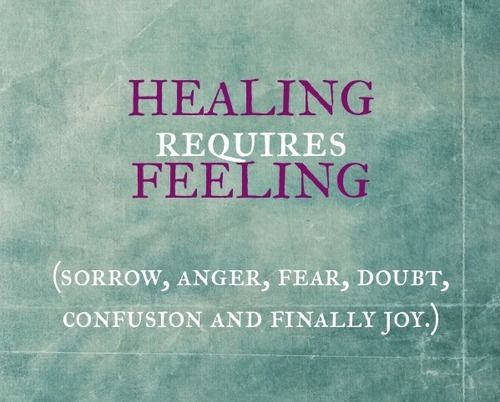
healing requires feeling

Posted in Uncategorized | Leave a comment

Shame, inside or out (part 1)

For me, air travel is one of the most difficult aspects of being overweight.  I go to extraordinary lengths to reduce the likelihood of being in the most uncomfortable situations, but unfortunately you simply can’t always control the situation.  This is also an important lesson for life in general, but more about that later.

I’ve never been afraid of the actual flying.  When I first started flying alone (my parents put me on an overseas flight by myself when I was 10, to spend a year living with my grandparents) I actually thought the view of the earth getting smaller and then bigger as you took off and landed was thrilling.  And don’t even get me started on how spectacular a sunset can be above the clouds.  However, I started needing a seat belt extension pretty early on.  The seat belts have actually gotten longer over the years, but somehow I still ALWAYS seem to be just ahead of the industry maximum.  I’ve actually gotten pretty used to asking for an extension and the flight attendants are usually pretty matter of factual about it, which has definitely helped.

The part I just can’t seem to get used to, though, is the face of a fellow traveler when he realizes that I will be crammed into the seat next to him, taking up the shoulder/elbow space and sucking all the oxygen from the row.  Having run out of alternatives at that point, all that is left for me to do is tangle myself into a knot that is least likely to spill into his space, try not to move or touch and spend the next couple of hours feeling guilty about the discomfort I have caused this undeserving victim.

istock_000009525426small

The above picture from a recent NPR article titled: Hating On Fat People Just Makes Them Fatter sums that feeling up pretty perfectly for me.  I’m not sure how appropriate the conclusions are, based on the results of the actual research, but it raises an interesting question for me: How much of the shaming is actually coming from the outside and how much of it is self-inflicted?  Don’t get me wrong, I know for a fact that it does happen, but how often do I assume it is happening, because it has happened in the past?  How often do I project my own self-loathing onto the people around me, when they might not have even wasted a single thought on me or the situation I am currently obsessing over?

Another “recovering girl,” whose courage for self-examination and honesty in her own journey inspired me in many ways to start my own, wrote this a few months ago: http://www.curvyogi.com/?p=336

Even though it is ultimately a story about a beautiful, well deserved compliment and the fallacy of expecting the worst (or projecting your worst fears onto other people’s actions and thoughts), it made me incredibly sad.  These kinds of thoughts and feelings and DOUBTS, before everything turns out to be “good” (and safe), are something I live with every single day.  I would have assumed the cabby was judging me personally, rather than commenting on the culture of yoga in America.  I would have felt guilt and shame for missing the shoe etiquette and that I deserved Suzy Sunshine‘s rudeness.  Not only would I have felt guilty, but I would have felt like I was not entitled to be there in the first place, because people like me can never be accepted anywhere.  And I would have run, long before having the chance to think (know) the instructor was avoiding me because my body is too repulsive.

Sounds a little extreme, right?  Rational me sometimes knows that all the bad things I think about myself aren’t true.  Rational me sometimes realizes the “great flaws” I’ve been trying to hide and compensate for all my life are not actually apparent to every person who passes me on the street.  But the feelings, those DAMN FEELINGS, are REAL and they are LOUD and the are TERRIFYING!  And all the positive self talk won’t convince me that I deserve what I have, that I earned where I am, that I am entitled take up space, to EXIST.

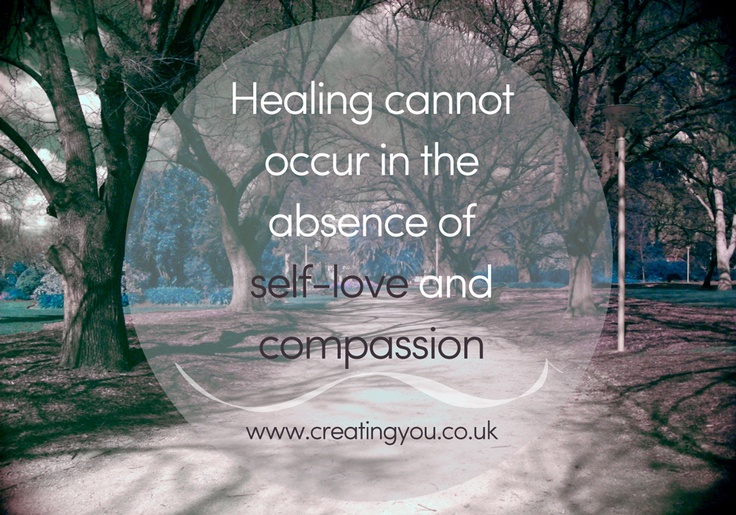
The moral of this story is that I need to learn to love and accept myself BEFORE I can expect to heal.  Unfortunately, I don’t know how to walk onto an airplane and accept myself enough to feel like it is not an audacity to feel as entitled to be there as everybody else.  At least not until I have lost half my body weight, which of course won’t happen until… well you get the point.

healing when


Posted in Uncategorized | Tagged , , , , | 1 Comment

Needing ED until you don’t

When you start this eating disorder treatment program (or any kind of therapy/self discovery journey) you start processing feelings that may have been comfortably packed away for decades and at the same time you start learning about eating intuitively. When you are ready, intuitive eating is pretty much the most logical thing you’ve ever heard in your life. When you hear about it for the first time you either say that can never EVER work, because if it did, the whole world would be eating this way, OR you say I have to start with that RIGHT NOW.

Basically, intuitive eating means learning to listen to your body’s signals, because your body was designed to know what it needs to survive. It means eating when you are hungry and stopping when you are full. It means recognizing when you are eating for reasons other than hunger and finding other ways to deal with those feelings. Not to be punny, but it really is, well, intuitive.

Here’s the rub, though: you don’t wake up with all the tools and new behaviors and closure on those damn feelings. So what I had started noticing is that I was open, enthusiastic even, about the process, but for some reason I absolutely REFUSED to keep the food and feelings journal (encouraged as part of the program). The purpose of the journal is to record what foods are being eaten at what time, where you are on the hunger scale before and after the food and what thoughts or feelings you are having. With the journals you can start looking for patterns that might be contributing to the emotional or compulsive eating and binges. It’s not a meal plan. It’s not a diet. There’s no judgement. It is simply a tool to provide insight and awareness. Why, then, was I simply not able to stay accountable on this task?

I’ll tell you why. Food has been my crutch for more than 20 years. You can’t just give that “support” up overnight. Additionally, I already *needed* ED with a regular, daily amount of circumstances and emotions. With treatment, I have been addressing feelings and issues that have been hidden away for a very long time, which means I need the support even more. Having learned the basics of intuitive eating and wanting to implement them right away, I was beating myself up about not following the guidelines and keeping the journal was just rubbing in my face the fact that ED was still ruling my life.

One of the many things I recognized this past week (it was a very tough, emotional week, but resulted in lots of great insights) is that the food is a symptom, not the actual disease. Imagine somebody with an allergy. Any kind of allergy. Imagine the symptoms of the allergy are itchy skin or stuffy nose, maybe headaches or upset stomach. You know the allergy is what is causing these symptoms and you know that as long as you have the allergen in your life, you will need to medicate the symptoms, but all the allergy medication in the world will not keep you from having the symptoms, unless you remove the allergen from your life. Long story short, I had to accept that I need to take the time to deal with the source and getting frustrated with the symptom, and my inability to just shut it off, is just holding me back. I had to accept that I need the food while working on the source and that’s OK. It’s scary in the short term, but long term it is the ONLY way to heal.

One of the recommended reading books (Eating in the Light of the Moon, by Anita Johnston) uses a very clear metaphor for this situation. I’m going to paraphrase, so if you know the story, you’ll have to cut me some slack on the details.

You’re standing on the bank of a raging river in the rain, when the bank gives out and you are suddenly tossing in the rapids. You grab onto a log floating by and are saved from drowning in the rough waters. You finally get dumped into the middle of a lake, where the water is calm, but the shore is a long way in the distance. You are still holding onto the log, but can’t swim to shore with just one arm, while dragging the log, but you can’t get there without it either, because the log is what’s keeping your head above water. You know you have to let go of the log, but you are afraid to let go, for fear you are not strong enough to swim to shore without it. You are determined to make it to shore, but know you need to build the physical strength/endurance and mental confidence to ensure you can get there safely, so you start the work. First you let go of the log for a moment and try floating. When you start to sink, you grab back on. Then you let go and try treading water. When you start to get tired, you grab back on. Every time you let go, you are able to float and swim longer than the last time, but whenever you have gone as far as you could, the log is there to catch you again. Until finally, one day, you are strong and confident enough to let go of the log and swim to shore.

Last week I learned to accept that ED served a purpose for me at one time. It helped me stay afloat. And now I have to embrace it as the thing that will continue to save me until I am strong enough to swim ashore. So, ED, I may need you right now, but be forewarned, as soon as I’m strong enough, we are breaking up. Forever.

Posted in Uncategorized | Tagged , , , , | 2 Comments

Path to Inner Child: Feel More, Think Less

I’m rational.  I might even say I’m TOO rational, if I rationally believed there was such a thing as too much reason.  However, I’ve been noticing in my recovery process that I comfortably wrap myself up in rational, reasonable, logical thoughts, to keep myself from feeling the feelings.  Kind of like using food to distract myself from being uncomfortable.  Then I apply reason to food and this happens:

eat the whole cake

But I learned something this week.  You can’t really reason or rationalize with a child.  It can be difficult to imagine or consider that there is another person, more specifically a child, inside yourself, but when I think about it, I am a rational adult on the outside, in life, but my feelings and old wounds, or thoughts that are based in old situations are less controlled/measured, like those of a child.

So, for the sake of argument, let’s say the inner child is the source of feelings and those feelings are totally separated from the adult rational thoughts.  What would happen if you took away a child’s blankie, stuffed animal or other security/comfort item they’ve been sleeping with since they were born?  The child would have a very emotional, visceral response (sad, scared, nervous, lonely, lost, etc) and no amount of telling them, rationally, that this blankie/animal/thing has no physical powers of protection will change how they feel about that loss.  In fact, the more you try to downplay the value of the item, the more upset they might become, because now you add dismissed, misunderstood, unloved, uncared-for (that might not be a word) to the list of initial emotions.  (Disclaimer: I don’t have kids.  I don’t know the proper way to handle a child when their security items is lost or in the wash.  The purpose of this comparison is purely to get to the source of my own cognitive dissonance.)

There’s a story behind this revelation, but the more I work through stuff, the more I am leaning that it’s not about the individual instances, it’s about where the feelings are coming from in those situations.  The bottom line is, I was/have been dismissing my feelings, because they could not always or immediately be rationally explained and the chaos/inner turmoil is very hard for me to live with.  This goes back to my need to fill the emptiness.  Fill the silence.  I have a hard time feeling the feelings and then patiently inquiring what they are about and where they are coming from.  I am much more comfortable putting together a firm story that explains everything away, or just go for the food and avoidance of feeling them in the first place–probably not even in that order.  The rationalizing away the feelings is new (at least consciously) since shining a spotlight on the old crutch, food.

Interestingly enough, when I started questioning the urge to rationalize all the feelings, I discovered that this has been part of my mechanism against my mother.  When I repeat some of the things she has said to me over the years in therapy or group, the reaction I usually get is that her statements aren’t reasonable/realistic/based in reality/rational, etc., which has always bothered me.  A lot!  I consider it a huge weakness, so I go completely in the opposite direction.  In order to not get sucked into her illogical beliefs and become irrational right along with her, I used reasonable, sensible, logical arguments (well, logical to ME) to avoid the emotional response I didn’t want to feel, or didn’t want her to see.

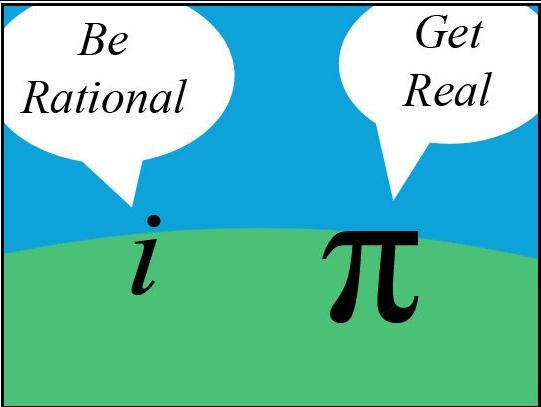
But here’s the funny part.  I always tell one of my friends that “you can’t reason with crazy.”  That’s not a mental health comment.  I mean you can’t reason with someone who refuses to be reasonable.  Just like the numbers in the math joke below can’t make each other real or rational.

math joke

So at the end of the day, I need to accept that feelings don’t HAVE TO be rational/reasonable/well thought out.  It’s OK for me to feel them and be frustrated, without having to soothe myself with food or reason.  Acknowledging my thoughts and feelings and accepting that they are OK and somewhere deep down have a source that will make sense some day might even might keep my inner child from digging in her stubborn heels to get a reaction out of adult me.  I’m going to keep an eye on that and let you know how it turns out.

I have more to say about intellect versus senses, but let’s save that for another day.

Posted in Uncategorized | Leave a comment

The Codependency Chronicles

Last week in group, we learned about the Karpman Drama Triangle. There is some fascinating background on the origin and uses of the triangle, but for the purposes of this blog post (because it might go on forever and never go live otherwise), I will stick with the basics.

The Drama Triangle has three interconnected (read co-dependent) “players”: The Perpetrator (sometimes referred to as prosecutor or persecutor), The Victim and The Rescuer.

Karpmans Drama Triangle

You might recognize the Perpetrator/Victim dynamic from the assertive communication post. Aggressive communication would be the Perpetrator’s role, passive communication would be a victim position and passive-aggressive communication is what keeps the Perpetrator and the Victim connected and, frankly, what turns a Victim into a Perpetrator (by trying to manipulate a response) and a Rescuer into a Victim (by expecting gratitude or some other kind of repayment). Then the Rescuer becomes a Perpetrator (because s/he resents being taken advantage of) and the cycle just goes on and on.

The key point to getting out of this dysfunctional cycle, is recognizing that these roles are 100% dependent on each other. Clark Kent would never have an opportunity to rip off his clothes in a phone booth, if there was no villain to slay and victim to rescue. Superman needs these two players in order to even exist. His entire identity is based on rescuing, which brings me to the non-rhetorical portion of what might turn into a pretty long post…

When I first started formulating this post, I thought I would be revisiting the situation with my friend, but as it turns out, I have a much longer history being the rescuer, turned victim, turned perpetrator than I originally realized. Enter: my mother. As a non-expert, I think blaming your mother is kind of a psych cliche, which is why the following is one of my FAVORITE puns:

Freudian Slip

Jokes aside, as I was retelling the story of my assertive communication empowered moment, I started recognizing parallels to the things that frustrate me most about my mother (insisting on victimhood, not taking responsibility for herself and any suffering she caused/causes, absolute refusal to be based in reality). And then I realized that, like Clark Kent, I need the victims, in order to be the rescuer, which is somehow tied to my self worth (that’s an inquiry for another day) and then I DEEPLY resent the fact that I put my own needs last in order to save someone who doesn’t even appreciate it, or worse, manipulated me into doing it. In my family dynamic, I have always been the responsible one. The adult. The rational thinker, who considered the consequences before acting. And I have learned to identify so much with saving the day, I have continued to give my mother and friends the security of knowing that if they didn’t do it (whatever “it” was), that I would take care of it, because I have been afraid of the consequences of walking away.

Not to ramble on about this for too long, but even after learning about assertive communication and how to get out of the drama triangle, I am making excuses, mentally resisting. I still struggle with asking for what I really need, because of the possible (real and perceived) consequences and rejection of not getting it. Maybe the resistance is caused by the fact that I need this rescuer role for my self worth, at least until I can find a new dynamic to replace it. This is a great segue to my next topic (coming soon): the struggle between my rational thoughts and my emotional (and stubborn) “inner child.” It sounds very multiple personality, but it continues to make more sense to me as I go through the work, and how this struggle is making the eating disorder dig in its heels.

Posted in Uncategorized | Tagged , , , , , , , , , , | 3 Comments